Great Lakes Growers’ Blueprint for Profitability
nest_clock_farsight_analog 3 min read
Take a stroll through Great Lakes Growers’ 2.75-acre greenhouse operation in Burton, Ohio, and it’s like walking through time. Managing facilities ranging in age from six to 13 years old, Director of Growing Renato Zardo doesn’t just grow lettuce. He fine-tunes a production strategy that adapts to each environment’s strengths to maintain consistent yield and profitability.
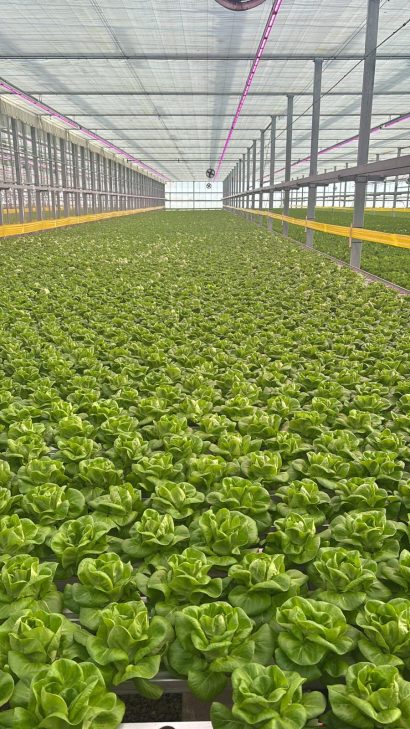
“I have five different growing environments that give me five different crops even though they’re the same variety,” he says.
Getting the best possible yield in all of his greenhouses is easier said than done. In addition to mastering the different growing conditions of each facility, Zardo must be intentional about upgrades as well as retrofits.
Production planning
To navigate these different growing conditions, Zardo has developed a strategic approach to production planning. The wide range of technology and equipment across Great Lakes Growers’ greenhouses means he must be especially careful when deciding where to grow each of his lettuce varieties.
The lettuces grown in each greenhouse are determined by the level of tech, light intensity, and glass used in the facility. “That’s the difference between finishing a crop in 35, 38, or 40 days,” Zardo says.
Crop placement is based on sensitivity. The most delicate and profitable lettuces are grown in the high-tech greenhouses while the hardier, less profitable varieties are grown in the low-tech facilities.
“Let’s say I have butter lettuce and cut lettuce growing together,” Zardo says. “The butter lettuce will drive the greenhouse because it’s sensitive to tipburn.”
While he can afford to have a smaller yield on cut lettuce, he cannot afford to lose his butter lettuce crop entirely. So, he must adjust the lighting recipe to be more suitable for butter lettuce than cut lettuce.
“Higher yield on the cut lettuce wouldn’t make sense if I lost the butter to tipburn,” he explains.
Be intentional with technology upgrades
Beyond deciding what to grow where, Zardo must determine the right time to upgrade his facilities with new technology and equipment.
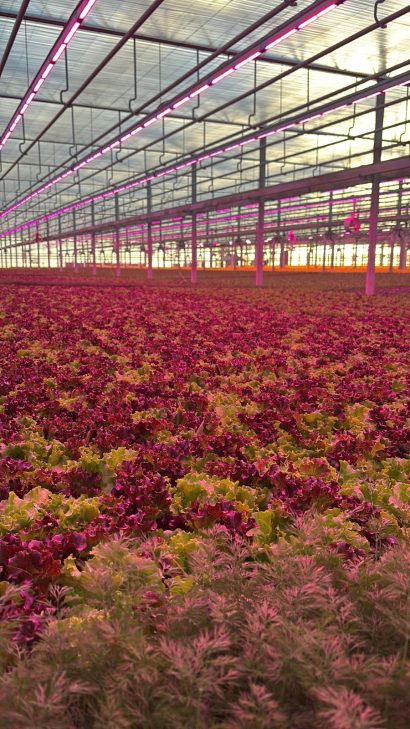
Great Lakes Growers’ careful, strategic approach to production planning extends to technology upgrades. The operation has made minimal updates to each of its greenhouses, only investing in new tech when it makes sense. But when it builds a new greenhouse, it makes sure the structure has the highest level of tech available.
Problems tend to emerge when growers rush into expansion and invest in new tech without proving its value. This is another instance where Great Lakes Growers’ decision to grow slowly has worked in its favor.
“We have seen growers grow too fast in an industry that’s not doing that well,” he says. “We grow slowly, with certainty that our expansions will be very related to our market.”
But this decision hinges on how practical the upgrade is. When it comes down to it, Great Lakes Growers is a lettuce-growing operation. Leafy greens aren’t a high value crop, so the profit margins aren’t very high.
Ultimately, Zardo says, he needs to remember that his job is growing lettuce. Investing in expensive new tech rarely has a major ROI in greenhouse production.
Reading the Plant First
No matter how old a greenhouse is or advanced the technology inside of it, Zardo says success ultimately comes down to reading plants correctly.
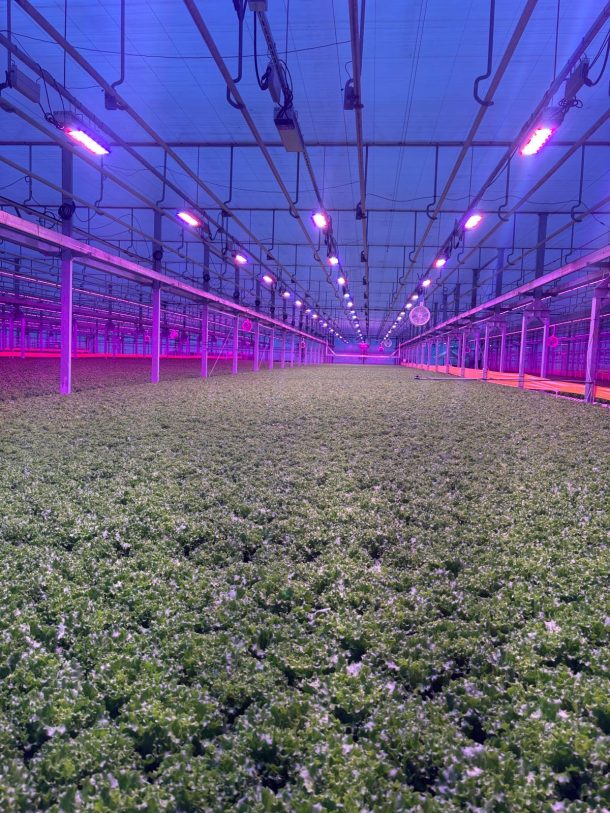
“If a plant can’t handle your environment, it will let you know,” he says. “You have to learn how to read your plant. It will tell you if your environment is too much, not enough, or just right.”
There is no shortcut for grasping this concept. It takes time to figure out how a greenhouse works and what plants want – but every greenhouse and plant are different. Once a grower masters the conditions of their facility and how to grow their crops, that’s when the magic happens.
“You’re not going to get the hang of growing during your first or even second year of it,” Zardo says. “Growing is a science, and it takes time to understand it. There is no shortcut for experience.”
In the spring, Great Lakes Growers will add another acre to its greenhouse operation — the next chapter in its walk through time.
While this greenhouse expansion will be equipped with cutting-edge technology, Zardo’s approach remains the same: adapt to each greenhouse, prioritize the crop, and only expand when it makes sense. This plant-first strategy has kept Great Lakes Growers profitable while newer, tech-focused operations struggle to find their footing.
Tags: greenhouse, production