A Midwest Proving Ground: Inside Green Legacy’s New Trial Garden
nest_clock_farsight_analog 5 min read
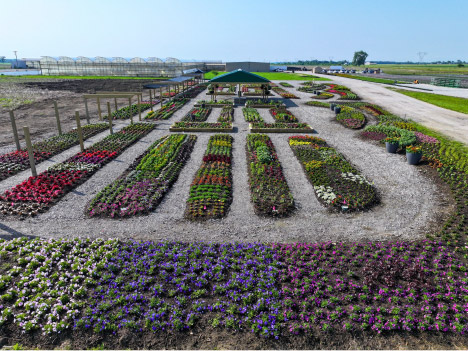
When Green Legacy broke ground on a one-acre trial garden in rural Ohio, they set out to do something different. Few trial gardens are located in the Midwest, and even fewer are built for landscapers. So, they created one, rooted in realistic growing conditions and designed for the people who shape the region’s landscapes.
Launched with a $100,000 budget in partnership with EMI — and with the support of 25 sponsors, EMI staff, and Green Legacy staff — the trial garden in Orient, Ohio, opened its gates to the public on August 15, 2025.
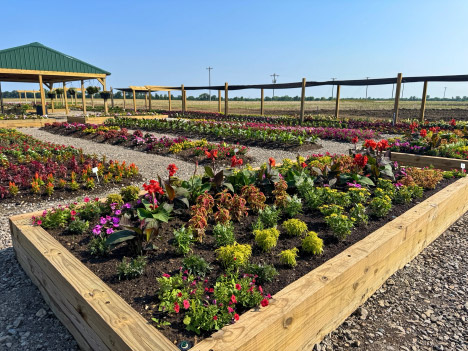
Today, more than 40,000 plants representing over 450 varieties fill the site, arranged not as sterile rows but as a living landscape. Irrigation rains down from overhead, shade structures break the sun, and seating areas invite visitors to linger.
Those were intentional design choices meant to mirror the conditions landscapers work with every day. “It’s not just about making it nice for visitors,” Brill said. “We wanted the setup to look and feel like what landscapers actually deal with on site.“
Green Legacy wanted to create a space that not only tests plants but models what the future of Midwest commercial landscaping could look like. The idea took root months earlier in a conversation between Dan VanWingerden, Owner of Green Legacy, and one of their key customers, EMI.

“They were telling us what they wanted to buy,” said Audrey Brill, Trial Garden Coordinator. “Dan wanted to flip that so we could show them what they need.“
Brill, a recent graduate of Ohio State with a degree in Sustainable Plant Systems, was originally a math major, but switched paths after a general education course in horticulture. “I thought, why be an accountant when I can hang out with plants all day?” Now, as Trial Garden Coordinator, she leads the day-to-day work of the garden with a small team of seasonal help.
A Rapid Rollout with Industry Buy-In
After initial brainstorming in October 2024, the project moved from design to execution in a matter of months. By the end of February 2025, VanWingerden had called 20 breeders. Nineteen signed on. Construction began in March. And by Memorial Day weekend, planting was underway.
Each breeder selected and shipped their own showcase varieties. Many even designed their individual beds. The only ask? Make it beautiful.
“Dan’s goal for this first year was beautification,” Brill said. “The breeders gave us things they thought we should showcase in the Midwest landscape.“
Midwest-First, Landscaper-Focused
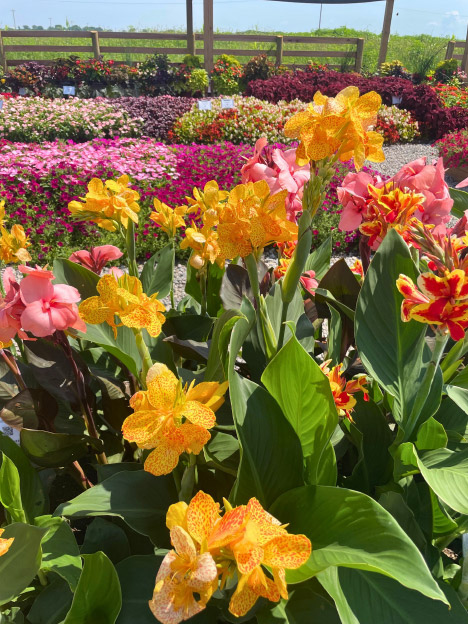
Unlike container-heavy trials in other parts of the country, Green Legacy planted directly into the ground using pop-up overhead irrigation to mimic real-world landscaping conditions.
“We were prioritizing mirroring what landscapers actually do,” Brill said.
This landscaper-first approach is rare in trial gardens, especially in the Midwest, where few trials exist outside of Michigan.
EMI’s involvement also sets this trial apart: the team regularly checks in with them to understand what metrics would actually be useful to the field.
“We have EMI to ask, ‘What metrics would be helpful for you to know from the trial garden? What kind of things do you want to see that would be beneficial for people in your industry?’” Brill said.
That collaboration underscored the garden’s purpose: not just to look good, but to deliver insights landscapers can use.
“Also being so close to Cultivate, one of the biggest events in the industry each year, is really helpful too,” Brill said.
Measuring and Seeing Performance
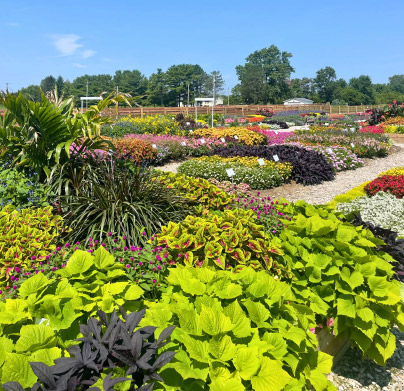
Brill’s work this first season centered on establishing the garden — only midseason did she begin capturing the plants’ performance.
“This first year, it was kind of a trial for us, too. We were learning so much, and we wanted it to look as gorgeous as possible. And data collection… we weren’t even considering it in the beginning,” Brill said.
Still, she started tracking performance on August 1st using a basic five-point scale. Each variety was scored for overall performance, resistance, uniformity, vegetative growth, and flowering. To do it, Brill printed spreadsheets, carried them into the field, and filled them out by hand.
“When I was going out there and rating each plant, I would print a spreadsheet out and just write it,” she said. “Especially because the [internet] service isn’t great. Paper and pencil is easiest.”
Plants that scored 4.6 or higher earned a spot in Green Legacy’s 2026 catalog.
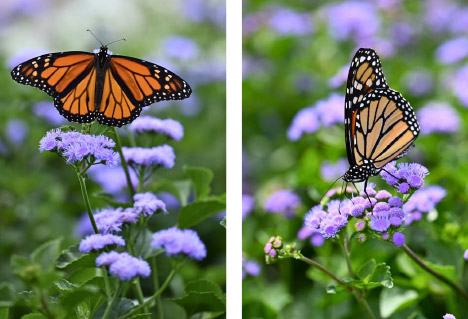
One of the top performers was Ageratum ‘Monarch Magic’ — which Brill described as a “butterfly magnet.“
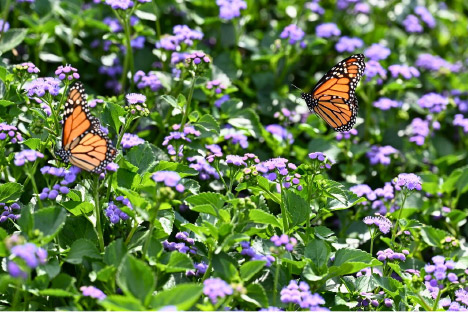
“I’ve seen over 50 butterflies on just the one plant,” she said. “It’s insane, and everybody who came to visit the trial garden mentioned it.”
Proven Winners’ Cleome and Helianthus also stood out, holding their color and performance longer than other comparable varieties, Brill noted.
PanAmerican Seed’s zinnias surprised her, too. “Zinnias are one of those flowers you see everywhere because they’re so easy to grow,” she said. “So, I didn’t think too much of it, but everybody was very impressed with them.”
Brill’s personal favorite was the dwarf Buddleia called ‘Little Rockstars’ from Dümmen Orange. “It’s like a mini butterfly bush,” she said. “Usually, when I see mini butterfly bushes, they’re a little scraggly, but these were really compact and full. I was really pleased with those, too.”
What’s Next (And What They Hope to Achieve)
Feedback has already shaped next season’s approach. For starters, Brill plans to rate plants biweekly and expand metrics to include bloom time and pollinator activity. She’s also shopping for a data platform that would let Green Legacy share results live on their website.
“I’ve been asking about software and what other trial gardens use,” she said.
In pursuit of the perfect tool, she will attend the International Plant Trialing Conference in Minnesota next month, where there will be an entire session dedicated to digital data tracking.
“I’m going to that conference to hopefully learn about some kind of software, so that when I take data, I can immediately put it into the [system] and it’ll upload to our website so that it’s more of a public, ‘anybody can use this information’ kind of thing.”
The trial garden was always meant to be a resource, not just a display.
“The goal is to make this useful to as many people as possible,” she said.
Visitors — from landscape pros to curious passersby — are already taking notice. Some take notes. Others leave with ideas. And more than a few have walked away asking how they can start buying from Green Legacy.
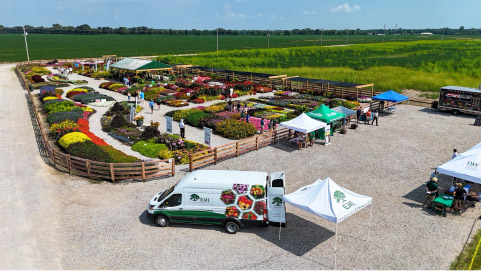
Plans are already in place to expand the trial garden to four acres, which triples its current size, with perennial beds added for multi-year trials.
But Brill emphasized that even with the eventual expansion, their mission remains the same: highlight new plant varieties and landscape performance, beautify the Midwest, and give decision-makers data they can trust.
“We want people to have access to the highest-performing plants,” she said. “And we hope to be one of their resources for figuring out what those are.”
Tags: butterflies, garden