Samurai Precision Meets Midwest Horticulture: Inside the Collaboration Driving Grafting Automation
nest_clock_farsight_analog 4 min read
At Ohio State, a compact Japanese machine is helping researchers rethink what’s possible with vegetable grafting — and opening new doors for crop resilience, labor savings, and food system innovation.
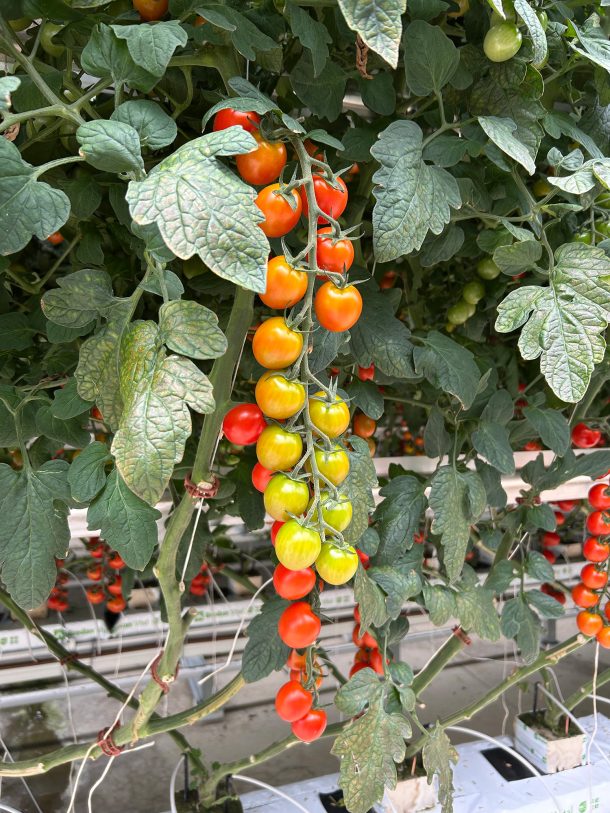
In a quiet greenhouse at The Ohio State University, a compact robot is doing something profound: it’s grafting tomatoes with near-perfect accuracy, and it’s doing it faster than a seasoned human technician.
Developed by Kusakabe Kikai, a Japanese industrial manufacturer new to agriculture, the grafting machine uses a patented side-cutting blade that OSU Professor Dr. Chieri Kubota jokingly calls “samurai-style.”
By cutting laterally, the machine requires significantly less vertical space for the blade to move, allowing for a more compact design.
Growers can also choose their preferred cutting angle before the machine is built, a feature that adds flexibility and customization.
It’s a small-footprint solution with a large impact, promising to simplify a notoriously tedious step in vegetable propagation — and opening up new possibilities that hand labor can’t achieve.
From Osaka to Ohio: How the Partnership Began
The story started in 2016, when Kubota was still at the University of Arizona. During a visit to Osaka, Japan, she was introduced to Kusakabe’s president, who had heard of her work promoting grafting in the U.S. The connection stuck.
Years later, at OSU, she invited the company to join her research consortium and showcase their work in North America. The company donated one of its machines to OSU — currently the only one of its kind in the U.S.
Simple to Operate, Easy to Maintain
“It’s very simple [to use]. It’s pretty much ‘place plants,’ ‘hit button,’ and then ‘get the next set of plants ready,’” said Dr. Jason Hollick, who oversees much of the hands-on research. “Most people are up and running within two hours.“
After it’s clicked, “there’s no difference between experienced workers and beginners,” added Koji Shimada, head engineer of grafting automation at Kusakabe.
Maintenance is equally straightforward. Rather than computer screens displaying error codes, the machine uses a system of indicator lights.
“Based on whatever lights are lit up, you just look and see what that corresponds to,” Hollick said.
And thanks in part to the precise angle and steadiness of the cut, survival rates in OSU trials have reached 100%.
Grafting Speed and Survival Rates
The machine grafts up to 400 plants per hour per Kusakabe’s trials, with 300 per hour being typical. According to Shimada, that’s roughly twice the speed of average human grafters.
Beyond Automation: What Machines Can Do That Humans Can’t
But Kubota’s interest goes beyond automating labor. “I’m most excited about what machines can do that humans can’t do easily,” she said.
For example, grafting earlier in a plant’s developmental stage could improve healing rates and reduce propagation time. Humans can’t reliably graft at those delicate stages, but a machine might be able to.
Lowering the Cost of Grafted Plants for Field Production
While greenhouse tomato producers have embraced grafting for years and have seen yields increase by 15%, field production in the U.S. still lags far behind due to its high cost. Grafted plants require more labor and often suffer losses during the process. Many U.S. nurseries over-seed by up to 40% just to compensate for grafting and germination failure.
Mechanization potentially changes that equation. “We try to lower the loss during the process so the price point comes down,” Kubota said. When that happens, grafting’s value becomes more accessible.
In Asia and Europe, where grafting is more established, Kusakabe’s machine has already been adopted. OSU hopes its U.S. trials can pave the way for wider use here.
They’re even inviting growers to demo the equipment firsthand. “If nurseries want to use our machine to test their plants, just contact us,” Kubota said. “We’re happy to work together.“
What’s Next: New Models and a USDA Research Initiative
According to Shimada, Kusakabe is now developing a lower-cost model and a new version tailored for cucurbits — crops like watermelon and cucumber that typically require more complex grafting techniques. Both are expected within two years.
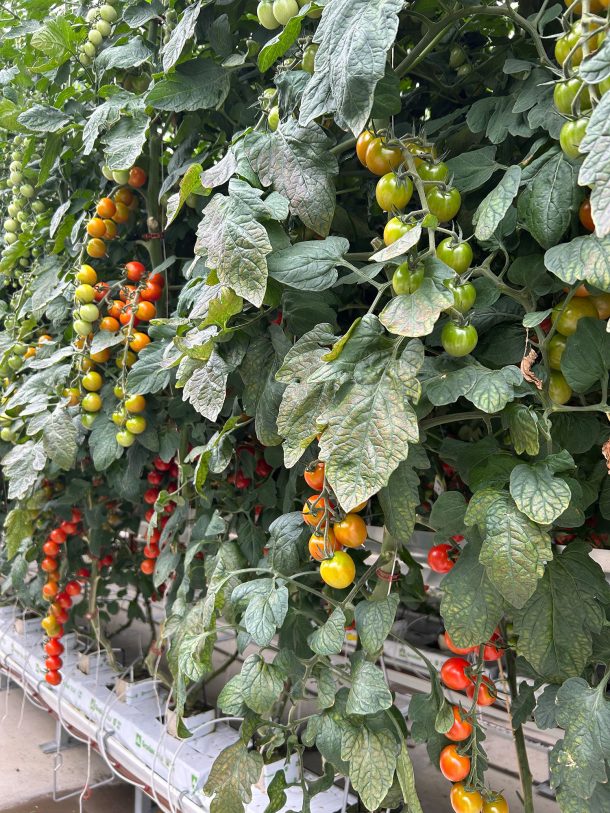
Meanwhile, Kubota and Hollick are pursuing a USDA planning grant that would unite nurseries, engineers, and researchers around a shared goal: lowering the cost of grafted plants across the board. Partners include Tri-Hishtil in North Carolina, Morning Star in California, and California Masterplant.
The team at OSU envisions a future where mechanized grafting isn’t just faster and cheaper — it’s fundamentally better.
“Grafting gives us a way to quickly adapt to drought, pathogens, and other disease or environmental stress,” Hollick said. “By having more mechanized ability to graft, you increase the [accessibility for growers to] actually use this, economically and efficiently, for more cropping systems.“
Scaling Grafting for Climate Resilience
And with climate volatility, rising labor costs, and mounting crop pressures, that scalability carries big potential.
“I like to see the direction of machine grafting [go] beyond human. So it’s not replacing humans, but [achieving] something new, something special, [only possible] by machine,” Kubota said.
With the help of researchers, growers, engineers, and a small machine wielding a precision samurai blade, agriculture is on its way to reaching those superhuman heights.
Growers interested in testing the Kusakabe Kikai grafting machine can contact Jason Hollick (hollick.4@osu.edu) at Ohio State University’s Department of Horticulture and Crop Science.
Tags: grafting, greenhouse, nursery