Willoway’s Secret to Moving 36,000 Hydrangeas? Six Driverless Burros
June 20, 2025
You might find yourself doing a double take at Willoway Nurseries in Avon, Ohio, where self-driving vehicles are the new norm.
Spread across 1,000 acres, the operation recently deployed six autonomous tractors from a Philly-based company called Burro, and their impact on efficiency has been immediate.The Burros arrived in spring and are already proving to be reliable haulers in the nursery’s canning process, delivering newly potted plant material to designated drop-off points. 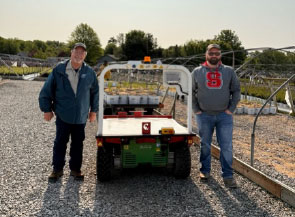 “We got a fleet of six of them back in March,” said Willoway’s Staff Horticulturist – R&D, Ben Averitt. “We’ve mostly been using them for our canning process, for delivering newly canned material to the set downs.” Each unit runs on preprogrammed routes built from drone-generated maps and custom overlays. It’s a setup that takes time to establish, but once in place, the system becomes intuitive. “It’s a slow process, but then once you have it all drawn, you punch in the location you want it to go to and it finds the best route to get there based on the information it has,” Averitt explained.
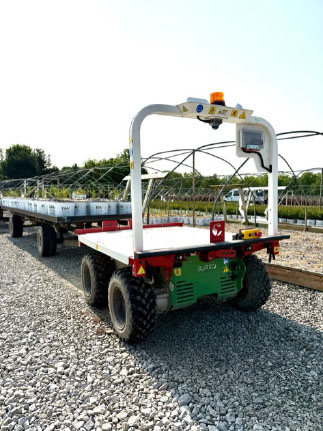 For light loads, speed is intentionally limited to about 2.5 miles per hour to prevent plants from jostling off tractor beds during transport. Still, even at that speed, the Burros are making a difference. “It’s saving us a body moving back and forth on a tractor,” Averitt noted. The labor efficiency afforded by the Burros has been massive. Add in a forklift for unloading and “now we’ve taken a four-guy process down to one guy,” said Averitt. The other three workers, now freed up from repetitive driving, are deployed to higher-value nursery work like trimming, spacing, and fertilizing. Besides their efficiency, the Burros are clever and surprisingly interactive. Outfitted with sensors, they can detect obstacles within six feet, stop at intersections, and emit a short honk as a safety measure.
  They can also follow a worker around the nursery, a feature Averitt likened to “a little puppy dog.” Currently, each unit must be manually started every morning, but updates are on the horizon. An autonomous docking station is in development, which will allow the Burros to charge themselves overnight and begin work on a preset schedule. “We’ll be able to home, dock, plug in, and then [it can] unplug itself. Say, six o’clock in the morning, you want it up and running, and bam, there it is,” Averitt said.
In terms of strength, the Burro Grande is rated to tow up to 5,000 pounds, though the Willoway team has tested it with loads up to 9,000 pounds with no complaints. Recently during a large contract order, the Burros moved 36,000 hydrangeas with remarkable speed and consistency. “We set up a superhighway for them,” Averitt said. “It was a slick setup.” The company is already planning further tech integrations. RFID tagging is being explored for real-time inventory mapping, and one of the Burros will soon be fitted with a mower. There’s also potential to attach sensors for thermal mapping and monitoring heaters in the winter. Willoway is one of the first nurseries in the country to use this technology, receiving the hundredth Burro ever produced.
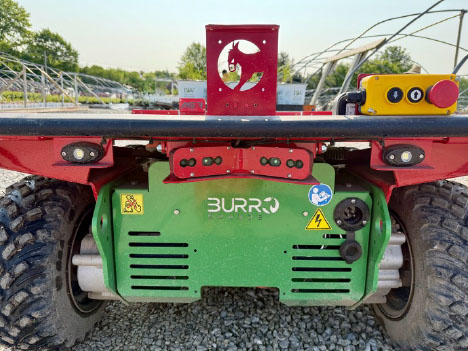 Their property is also the largest operation the machines have been deployed on to date. Willoway’s early adoption and expansive footprint has made it a pioneer in the industry, a case study for integrating automation. Learning to use the Burros has been relatively easy. Averitt estimated that most staff are up and running with the system in about two hours. One of the company’s H-2A workers has become the in-house expert, regularly updating maps on his phone and helping others navigate the system. As with any new tool, there’s been a cultural adjustment. Averitt laughed when recalling some of the early reactions. “One of our biggest issues was that people wanted to pet them,” he said.
 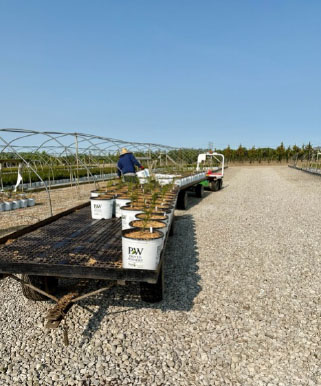 “There’s a lot of jokes about who’s the real burro—the machine or the guys. ” Jokes aside, the benefit is clear. “When these things are working, which is 90% of the time, they’re awesome,” Averitt said. “We can cook with peanut oil with these things.”
Automation isn’t replacing workers at Willoway, it’s allowing them to do more specialized tasks. And on a 1,000-acre nursery with no time to waste, that kind of ROI speaks for itself. “The whole goal is to take out the mindless work,” Averitt said. “What these guys are really good at is their job. Why have to drive a tractor?”
Visit Willoway Nurseries and learn more about their new burro buddies!
AMGUARD Strengthens U.S. Specialty Markets Team
June 19, 2025
Two promotions and four new hires demonstrate commitment to AMGUARD and OHP specialty market customers
RESEARCH TRIANGLE PARK, North Carolina | June 18, 2025 – AMGUARD™ Environmental Technologies (“AMGUARD”), the specialty markets division of AMVAC Chemical Corporation, a wholly owned subsidiary of American Vanguard Corporation (“AVD”), is pleased to announce six appointments to bolster its commitment to serving US specialty market customers.
Frank Fornari was promoted from OHP Technical Sales Manager to Director of Sales. Frank has been responsible for achieving record-setting nursery and greenhouse sales performance in Florida and Alabama. Prior to OHP, he worked in the specialty markets with BASF and Valent. In his new role, Frank will be responsible for growing and managing the ornamentals and Controlled Environmental Agriculture (CEA) businesses.
Sam Drahn was promoted from OHP Technical Manager to Director of Technical Services. Sam has been responsible for providing technical support and messaging for plant growth regulators (PGRs), herbicides, and specialty products to technical sales managers, growers, and distributors. In his new role, Sam will also provide technical support and messaging for insecticides and fungicides. Sam began his career working as a grower / propagator with one of the largest nurseries in the country, ultimately serving as Director of Research & Development across all locations. Prior to OHP, Sam spent nine years as Director of Research with a chemical manufacturer in the landscape and arboriculture markets. Sam is highly skilled in managing cooperatives and in-field researchers for both national and international projects.
Eric Ham joined AMGUARD as Midwest Technical Sales Manager. In this role, he will cover structural pest control in KY, OH, IN, IL, MI, and TN. Eric most recently was Key Account Manager for the Midwest and South regions with FMC Professional Solutions. Prior to that, Eric served as a Marketing Specialist with FMC for nine years. Eric also has experience with Nisus Corporation and Forshaw Distribution. He holds a bachelor’s degree in agriculture – entomology from the University of Kentucky. Eric is a certified applicator in Kentucky and Ohio and holds a pest control license in Kentucky. Ham will report to Ryan Klein, AMGUARD Director of Sales.
Joe Grippi joined OHP as Southeast Technical Sales Manager. In this role, he will be responsible for the market development and sales of OHP products, including fungicides, herbicides, insecticides, and plant growth regulators in the Greenhouse, Nursey, and Controlled Environment Agriculture (CEA) markets. Joe was most recently with UPL Environmental Solutions as a Key Account Manager for Specialty Products. Prior to UPL, he was Business Development Key Account Manager with Bayer Environmental Science / Envu, where he served for 22 years. Joe started his career at Elf Atochem and American Cyanamid.
Jeremy Sanderson joined OHP as Northeast Technical Sales Manager. In this role, he will be responsible for the market development and sales of OHP products, including fungicides, herbicides, insecticides, and plant growth regulators in the Greenhouse, Nursey, and Controlled Environment Agriculture (CEA) markets. Jeremy spent over five years at BioWorks, where he led sales operations, grew the Soil Blender business, and supported key accounts, including Hawaiian coffee growers. He also held regional sales roles with Harris Seeds and Harvest Moon Hydroponics, and he ran his own consulting business, Hybrid Horticulture.
Grippi and Sanderson will report to Frank Fornari, OHP Director of Sales.
Eric Rebek, Ph.D. joined OHP as Technical Services Specialist. In this role, he will lead and assist with creating and managing technical projects, protocols, and data in service to developing products and technical information for the dissemination to the OHP team, our partners, customers, and growers in the Nursery, Greenhouse, CEA, and Cannabis markets. Eric’s position will focus primarily on entomological and pathological issues to support OHP’s plant health & production portfolio (insecticides, fungicides, herbicides, PGRs and specialty products). Rebek will report to Sam Drahn, OHP Director of Technical Services.
“With Frank and Sam at the helm, expanded service in the Southeast and Northeast, and additional technical support, OHP is poised to deliver exceptional service to our greenhouse and ornamental, nursery, CEA, and cannabis customers,” said Shayne M. Wetherall, CEO of AMGUARD and President of U.S. Specialty Markets. “Additionally, the addition of Eric Ham strengths our commercial presence for structural pest control in the Midwest.”
About AMGUARD Environmental Technologies
AMGUARD Environmental Technologies is an emerging provider of non-crop and specialty technology solutions for the U.S. Public Health, Pest Control, Ornamental & Greenhouse, Golf, Lawn & Landscape, Foodservice, and Consumer markets. We are the specialty markets division of AMVAC Chemical Corporation, a wholly owned subsidiary of American Vanguard Corporation. From our RTP headquarters and labs, AMGUARD discovers, develops, and commercializes a diverse portfolio of proven chemistries, innovative technologies, and green solutions into diverse markets. At our core, we are innovators. We are committed to protecting the population from disease vectors, mitigating structural pest damage, creating healthy foodservice environments and outdoor living spaces, and maintaining outdoor sports and recreation venues. Our mission is to provide our customers with powerful technology solutions to keep their businesses strong and growing. www.AMGUARDTECH.com
About OHP
OHP Inc, originally Olympic Horticultural Products, was founded with the goal of becoming the leading provider of technology-based pesticide solutions for the greenhouse and nursery production markets. Today, as we have evolved into our new OHP identity we are recognized as the leader in this market. The OHP team exclusively markets our products, specifically packaged and labeled for the greenhouse and nursery production markets, through a network of leading distribution partners throughout the United States and Puerto Rico. www.ohp.com/
About American Vanguard
American Vanguard Corporation is a diversified specialty and agricultural products company that develops and markets productsfor crop protection and management,turfand ornamentalsmanagement and publicand animal health. American Vanguard is included on the Russell 2000®and Russell 3000®Indexes and the S&P SmallCap 600®Index. To learn more aboutAmerican Vanguard,please reference the Company’s website at www.American-Vanguard.com.
Contact InformationAMGUARDEnvironmental Technologies
Shayne M.Wetherall, CEO& President, U.S. Specialty Markets
(919) 415-4360
ShayneW@amguardtech.com
5151 McCrimmon Parkway, Ste.275 Morrisville, NC 27560 | Amguardtech.com | (888)462-6822
Plantpeddler’s Poinsettia Playbook: From Trials to Timely Delivery
January 24, 2025
The poinsettia season may unfold in the final months of the year, yet it’s often a year-round planning process for growers of any size.
At Plantpeddler in Cresco, Iowa, the work begins long before the holiday rush.
In fact, the team invests months in varietal trials, capacity mapping, and perfecting greenhouse routines to ship a reliable, eye-catching crop on time. Some of the most important lessons learned during poinsettia production can improve workflow across the greenhouse, all year long.
Plan Ahead with the Market in Mind
Poinsettias are unique among seasonal crops because they can occupy greenhouse space for up to six or seven months, much longer than, say, geraniums.
According to Plantpeddler’s general manager Jason Sbiral, poinsettia rooting begins with pretty good numbers in May. Continuing through June and July, he and his team oversee production of the poinsettia liners. All told, Plantpeddler will root several million poinsettias for shipment to greenhouses across the US. Plantpeddler also grows out over 136,000 poinsettias for wholesale sales as pre-finished and finished, to growers and retailers, for holiday sales.
This long lead-up means Plantpeddler needs to forecast capacity and labor demands well before the busy fourth quarter.
One way that Plantpeddler navigated the question of capacity in 2024 was to develop a system on their Metazet FormFlex equipment to produce some eight-inch poinsettias in the air. This added another few thousand plants on top of typical production numbers across both greenhouse locations.
“Most of us have basket capacity overhead, but only produce with it during the spring cycle, though we use ours for some fall production, as well,” John Gooder, COO, says. “So, we’re looking at ways to create an income stream off of that infrastructure that’s already in place.”
Variety Selection and the Influence of Trials
Plantpeddler hosts a comprehensive Poinsettia Trial each year, evaluating more than 200 varieties from around the world. (The company’s 2025 Poinsettia Variety Day will take place Dec. 4, so mark your calendar now.)
This is a major event, international in scope, that draws breeders and growers from around the world to Iowa at the height of poinsettia season. The benefit for the Gooders and their team is that they get a front-row seat to the finest genetics emerging in the marketplace.
This trial environment allows the team to identify high-performing varieties for greenhouse performance, retail shelf life, and post-harvest longevity. Selections prioritize branching, bract color, Cyathia, and ease of production; important factors for a fragile crop that sees heavy handling during shipping.
Painted and Specialty Poinsettias
Perhaps Plantpeddler’s most notable differentiator is that 60% of its poinsettias are upgraded with paint and other “bling.” “That’s paint, glitter, shimmers, specialty treatments. All hand-painted,” Mike Gooder, president, says.
Painting introduces a host of considerations regarding bract shape and color, and thus the team seeks varieties that can withstand those meticulous hand-crafted touches during production.
“A variety might be terrific in the standard sales,” Sbiral says, “but as soon as you paint it, maybe it has some complications. We’re actually not just choosing for a great looking plant, we’re choosing for a plant that looks good, but also accepts paint.”
Those production dynamics are at play along each step of the variety selection process.
The commodity poinsettia market, largely driven by retailers’ expectations for traditional colors (primarily red, with some white and pink), remains strong. So, a high-quality, multi-bract plant is essential. In the grocery and traditional retail sector, a “premium” poinsettia typically means at least five good-sized bracts on a 6.5-inch pot. The industry standard provides a benchmark: If a variety produces many small bracts, it sacrifices bloom size; conversely, fewer bracts may yield larger individual blooms.
Balancing branch count and bract size is critical to meeting retailer expectations without compromising overall plant quality.
However, Plantpeddler and its retail base increasingly see strong potential in specialty poinsettias—new varieties, painted options, and unique forms—that can create market differentiation and wider consumer appeal. By offering both standard colors and innovative novelty programs, growers can increase retail interest and educate consumers on the broader possibilities of poinsettias.
Growers have an opportunity to move beyond commodity red poinsettias and explore distinctive varieties and treatments that ultimately expand the marketplace–and that work begins in proper variety selection.
By developing a clear process—and choosing genetics that can handle the extra work—Plantpeddler expands retail demand beyond classic red, white, and pink poinsettias.
Greenhouse Management: From Start to Finish
Uniformity is a key concept repeated by the team.
In fact, in poinsettias, uniformity is the guiding principle.
“If you have unevenness in your young plant going into poinsettia production, your chances of coming out on the backside with a quality crop are really low,” John says. “It’s those first two weeks of poinsettia establishment that really make or break the crop.”
To push early growth without overextending plants, Sbiral pulls multiple levers in his control: “You feed and give ample amounts of nutrition and water but also manipulate the plants with temperature–like a growth regulator situation”.
Plantpeddler has also shifted toward biorational tools for both pest management and root health.
“We’ve gone a lot more toward biorationals, even bio-pesticide,” Sbiral says. “We’re not 100% bio for pest control, but many of our customers are. So I am conscientious about products that will be compatible. With their bio programs.”
Lessons Learned and Adaptability
Because poinsettias are so tightly tied to holiday sales, on-time delivery is essential. With modern genetics and good production practices, during the season, there is minimal cherry-picking and downgrades.
“You can tell if you’re in good poinsettia season because the team is pulling poinsettias by the bench,” Mike says.
Even with careful planning, the grower must adapt to weather swings and cultural nuances.
“We had a really great poinsettia year in 2024,” Sbiral says. “But next year, I could do everything the same as I did this year and have a completely different outcome. The key is to observe the plants and be fluid. Make changes on the fly.”
His point underscores the reality of horticulture: Fine-tuned methods must still bend to unforeseen conditions.
Conclusion
Whether producing thousands of painted poinsettias or sticking to the commodity side of the market, poinsettias demand skilled planning and execution.
By conducting detailed variety trials, refining greenhouse protocols, and tapping into unique value-added offerings, Plantpeddler demonstrates how specialization can pay off in the busy holiday season.
As Mike says, “Poinsettias are like a one-shot crop. Without a strong beginning, it’s very difficult to finish well.”
A strong foundation and the willingness to innovate are at the heart of Plantpeddler’s approach—keys any greenhouse or nursery grower might keep in mind, poinsettia season or not.
Sarisa Insecticide now registered for drench applications
November 7, 2024
OHP is excited to announce the addition of a drench label with our popular Sarisa™ Insecticide, offering growers greater flexibility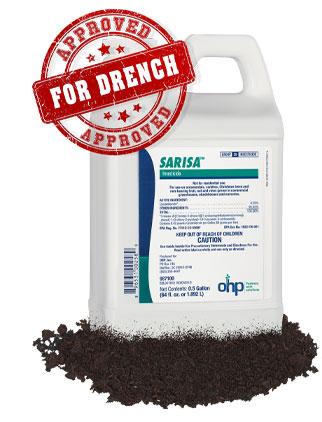 and application techniques to control a wide range of insect pests.
Sarisa’s new drench* label allows the active ingredient, cyclaniliprole, to target immature (larvae/pupa) life stage protection against key nursery and greenhouse pests such as thrips, red headed flea beetles and Japanese beetles among many others.
A diamide insecticide, the new Sarisa drench label registration also includes use on vegetables, specifically peppers and tomatoes, again providing growers with a well-rounded insecticide for their ornamental and vegetable crops.
“Sarisa continues to provide growers with an outstanding broad-spectrum insect solution for both our nursery and greenhouse grower customers. This drench label addition will be welcomed by many of our growers.” says Duffey Clark, OHP Vice President of Commercial Operations.
A diamide insecticide, Sarisa provides quick knockdown and residual activity of piercing, sucking and chewing insects with its novel mode of action. Sarisa has a 4-hour Restricted Entry Interval (REI).
Sarisa is formulated as a user-friendly soluble concentrate that may be tank mixed with appropriate partners. The use of a spreader sticker may help performance. Please refer to the label for specific recommendations.
*Drench label not yet registered in CA & OR.
Duffey Clark promoted to VP, Commercial Operations
August 27, 2024
OHP, Inc., (“OHP”), an American Vanguard Company (NYSE: AVD), is pleased to announce the promotion of Duffey Clark to the position of Vice President, Commercial Operations, of OHP® Inc., a leading provider of technology-based solutions for greenhouse and nursery production applications.
In this role Clark will lead OHP’s sales, marketing, and key account efforts in the ornamental, nursery, and greenhouse markets. He also will serve as a member of AMGUARD’s leadership team and will report to AMGUARD CEO Shayne M. Wetherall.
Duffey originally joined OHP as a Technical Support Manager in 2023, then was rapidly promoted to become OHP’s first Key Account Manager the same year. Prior to OHP, he held numerous leadership positions during a 20-year stint at Griffin Greenhouse Supplies, a longstanding distributor of OHP products. Additionally he served as a board member of Prokoz, which has a network of 26 turf and ornamental owner distributors.
“Duffey’s extensive market, commercial, and industry experience align perfectly with OHP’s expansion into growing CEA markets and our overarching commitment to bringing new technology innovations to market,” said Wetherall. “His strong industry reputation and leadership experience will be a valuable addition to OHP, AMGUARD, and its growing customer base.”